
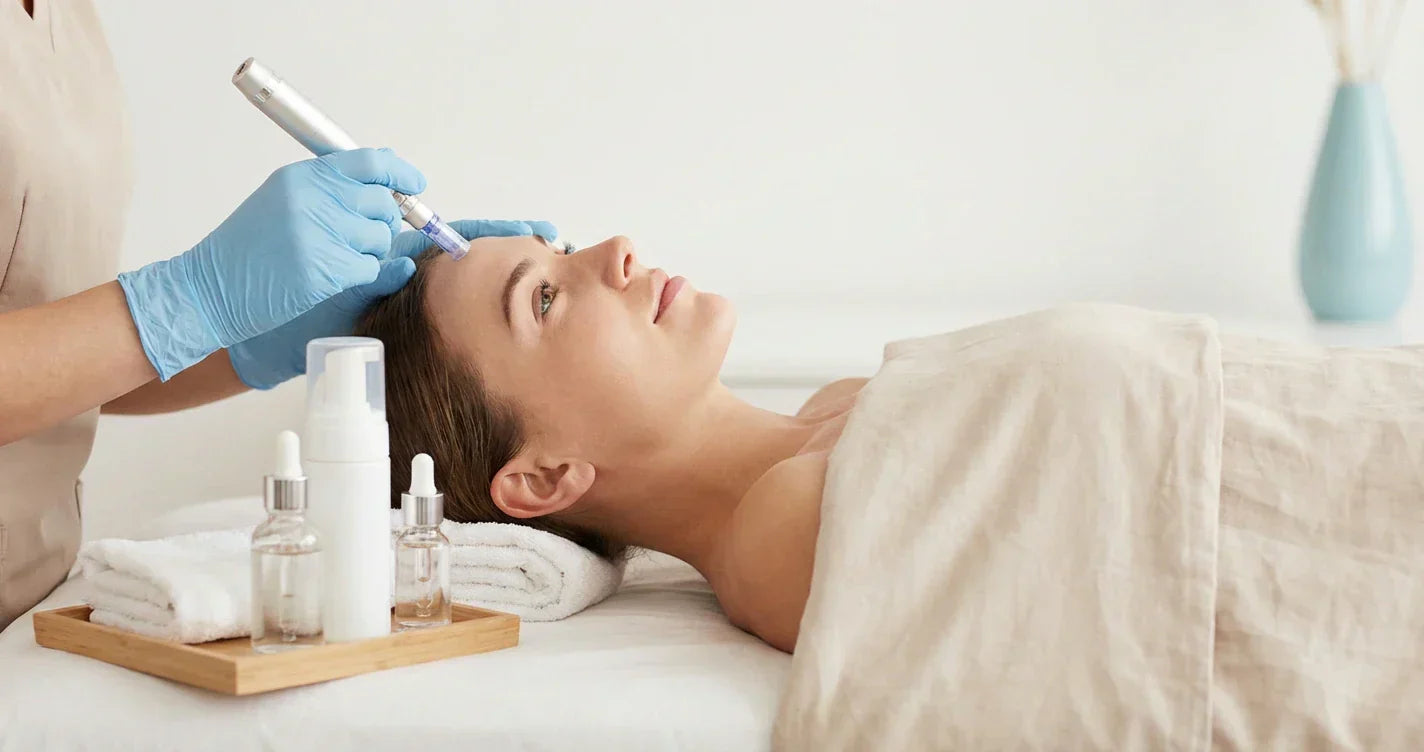
Microneedling mesotherapy: how to prepare in 7 steps
Treatment preparation
How should you prepare for microneedling mesotherapy?
Prepare for microneedling mesotherapy by keeping the skin calm in the days before the visit. At Luminexia Kraków we recommend avoiding new acids, retinoids, strong scrubs, tanning and aggressive home treatments before Dermapen. If the skin is irritated, inflamed, infected or freshly sunburned, the appointment should be postponed. On the treatment day the skin should be clean, without heavy make-up and without recent intensive aesthetic procedures. Iryna Christof, a beauty services technician at Luminexia (Polish title: technik usług kosmetycznych), checks contraindications, the treatment goal and the chosen formula before starting. After treatment, gentle skincare, SPF, avoiding sauna and pausing irritating active ingredients are the priorities until the skin calms.
Preparing for microneedling mesotherapy is mainly about arriving with a calm skin barrier and sharing enough information to choose the treatment safely. At Luminexia in Kraków, Iryna Christof checks your current skincare, recent procedures, medicines, active irritation and treatment goal before microneedling begins. This guide explains seven practical steps, from pausing irritating products to planning aftercare at home.
In this article, “microneedling mesotherapy” means a cosmetic microneedling treatment, often searched for as Dermapen. It is not classic injectable needle mesotherapy. Luminexia currently offers microneedling variants and does not perform classic injectable mesotherapy.
Microneedling preparation at a glance
The exact preparation window depends on the condition of your skin and the products or medicines you use. The safest approach is not to follow a rigid internet timetable blindly, but to remove avoidable sources of irritation and confirm anything medical before the visit.
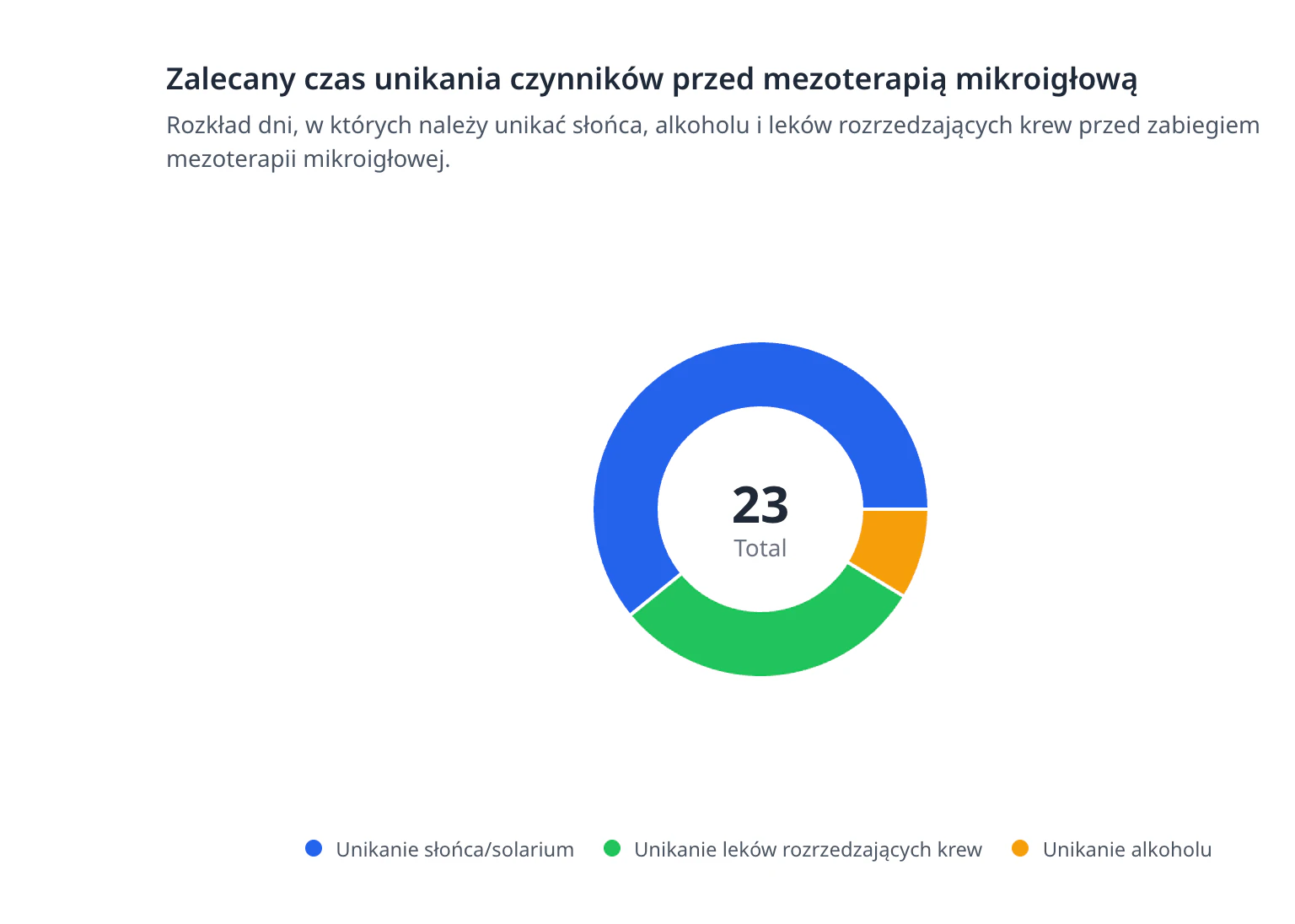
- In the one to two weeks before treatment: avoid tanning and do not schedule another intensive facial procedure close to microneedling.
- Several days before treatment: keep skincare gentle and pause strong home exfoliation when advised.
- Before changing prescription products or medicines: ask the clinician who prescribed them. Never stop prescribed medication solely because of an online checklist.
- Forty-eight hours before treatment: avoid alcohol if possible and focus on normal hydration and sleep.
- On the day: arrive without heavy make-up if practical and tell us about any new irritation, infection or health change.
- For the days after treatment: have gentle cleanser, moisturiser and broad-spectrum SPF ready at home.
For the treatment scope, current prices and available variants, see microneedling mesotherapy at Luminexia.
Why preparation matters before Dermapen or microneedling
Microneedling creates controlled microchannels in the skin. The aim is to support a normal renewal response and improve concerns such as uneven texture, visible pores, post-acne marks or a tired-looking complexion. Because the procedure intentionally challenges the skin barrier, it should not be layered on top of fresh sunburn, aggressive exfoliation or an unexplained inflammatory reaction.
Calm, well-supported skin usually gives the practitioner a clearer starting point. It also makes it easier to decide which intensity and formula make sense on the day. Preparation does not guarantee a particular result, and it cannot remove every possibility of redness or sensitivity. It does reduce preventable uncertainty: the treatment is less likely to collide with another strong stimulus that the skin is already managing.
Professional standards and transparency
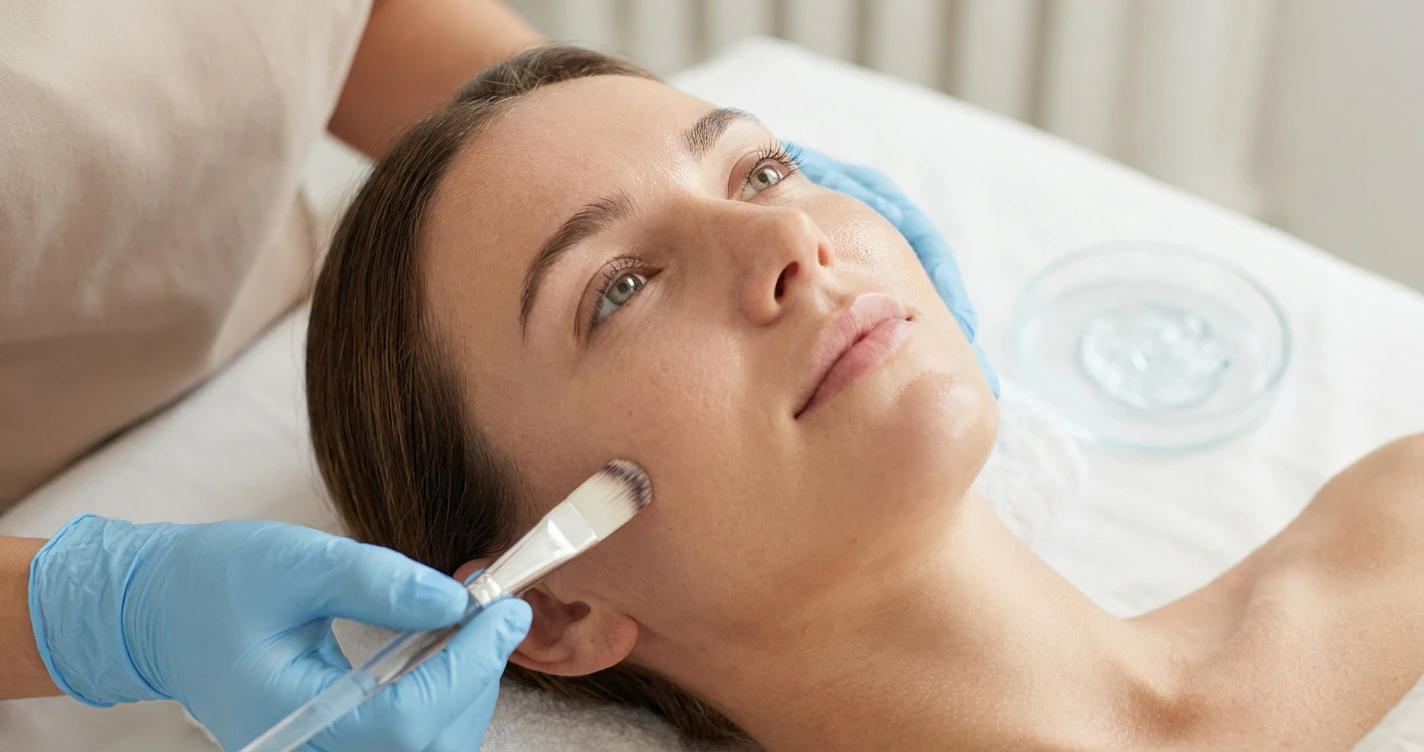
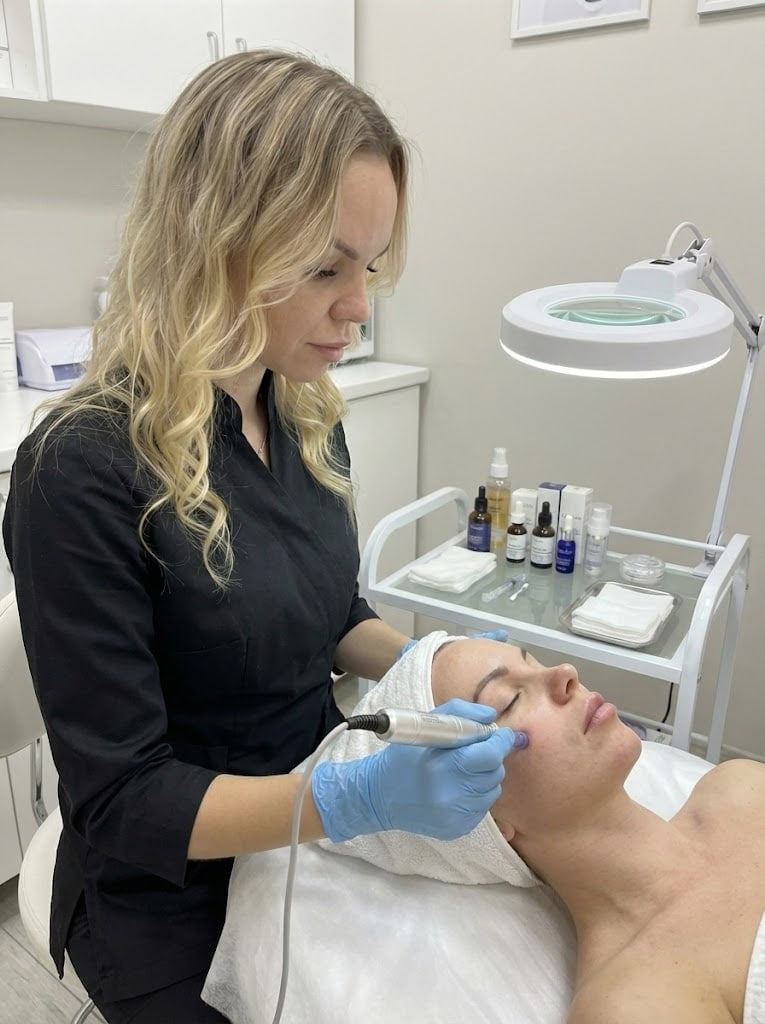
Microneedling at Luminexia is performed by Iryna Christof, a beauty services technician (Polish title: technik usług kosmetycznych). Before treatment, the goal, expected recovery, skincare and relevant contraindications are discussed. For microneedling, a sterile single-use cartridge is opened in front of the client and used for that appointment only. Product choice, working depth and aftercare are matched to the treatment area and the skin’s condition.
Transparency also means recognising the limits of a beauty-salon service. If a skin change needs diagnosis, if healing may be impaired, or if a medicine creates uncertainty, the appropriate next step may be medical advice rather than a cosmetic procedure. A consultation can organise the beauty-treatment plan, but it does not replace assessment by a doctor or dermatologist.
Step 1: consultation and contraindication screening
A useful consultation is not a sales formality. It is the point at which we check whether microneedling is suitable now, whether it should be postponed, or whether a gentler treatment is the better first step. Be ready to discuss active skin conditions, allergies, tendency to abnormal scarring, recent aesthetic procedures, pregnancy or breastfeeding, medicines, prescription skincare and previous reactions.
Active infection, an active herpes outbreak, open lesions, significant inflammation, fresh sunburn and unexplained irritation are clear reasons not to proceed that day. Other circumstances require individual clarification. These can include therapies that affect healing or clotting, poorly controlled health conditions, a history of keloid scarring, recent laser or injectable procedures, and ongoing dermatological treatment.
Do not discontinue prescription medication, antibiotics, anticoagulants or prescribed retinoids on your own. Tell Luminexia what you use and speak with the prescribing clinician if a change might be needed. The goal is a reliable decision, not a blanket rule copied from social media.
If you are unsure which information matters, book a professional skin consultation before choosing the procedure.
Step 2: pause irritating actives and exfoliation
Strong acids, retinoids, abrasive scrubs, waxing and intensive home peels can leave the barrier more reactive. Combining fresh irritation with microneedling can increase discomfort and prolong visible redness. The required gap is not identical for every person or product, so confirm the timing if you use prescription-strength formulas or have recently had a professional peel.
| Before the appointment | What to review | Why it matters |
|---|---|---|
| One to two weeks | Professional peels, laser procedures, waxing or other intensive treatments | The barrier needs time to settle before another controlled stimulus. |
| Several days | Strong AHA/BHA exfoliation, retinoids and abrasive scrubs | Pausing avoidable irritation can improve comfort and predictability. |
| Prescription treatment | Prescription retinoids, antibiotics or other clinician-directed products | The prescriber should decide whether and when any change is appropriate. |
| Until the skin is calm | New products that caused burning, swelling, rash or marked dryness | An unexplained reaction should be resolved before microneedling. |
Step 3: protect the skin from sun and tanning
Do not microneedle freshly sunburned or visibly irritated skin. UV exposure can leave the skin inflamed and may increase the risk of uneven pigmentation after another controlled injury. Avoid tanning beds and deliberate tanning before the appointment. Use broad-spectrum SPF and normal sun-protective habits, especially when the planned area is the face, neck, décolletage or hands.
If you return from a sunny holiday with heat, peeling or a new tan, tell us before the visit. Moving the appointment is often more sensible than trying to fit an intensive treatment into an unsuitable week. The same planning applies after treatment: do not book microneedling immediately before a beach holiday or days of unavoidable outdoor exposure.
Step 4: alcohol, pain relief and regular medicines
Alcohol may contribute to dehydration and can make bruising or flushing more likely for some people. Avoiding it for roughly 48 hours before the appointment is a practical precaution. Normal meals, water and sleep are more useful than a last-minute “detox”.
Medicines need more care than a general internet rule. Aspirin, anticoagulants, anti-inflammatory medicines and supplements can affect bruising or healing, but prescribed treatment must not be stopped without the agreement of the clinician responsible for it. Send us the name of the medicine before booking if you are unsure. We can explain whether the cosmetic appointment needs to move, while the prescribing clinician remains the person who decides about the medicine itself.
Steps 5–7: hydration, a simple routine and hygiene on the day
Step 5: maintain normal hydration
Drink normally in the days before the appointment and avoid arriving dehydrated after alcohol, illness or intense exercise. There is no need for extreme water targets or unverified supplements. Consistent hydration, food and sleep support general wellbeing better than a short, aggressive preparation regime.
Step 6: keep the skincare routine predictable
Use products your skin already tolerates: gentle cleansing, moisturiser and SPF. Do not introduce a new acid, retinoid, strong vitamin C formula or fragranced “miracle” product just before treatment. If the barrier feels tight, stings with water or develops a rash, contact us rather than trying to cover the reaction.
Step 7: prepare for a clean recovery environment
Arrive without heavy make-up if possible. At home, have a clean pillowcase, clean face towel and simple aftercare products ready. Directly after treatment, avoid touching the area with unwashed hands. Follow the personalised guidance on cleansing, make-up, exercise, sauna, swimming, active ingredients and sun exposure.
What happens during a Luminexia microneedling visit?
The appointment starts with confirmation of the treatment goal and a final skin check. The selected area is cleansed, contraindications are reviewed and the treatment steps are explained. The microneedling depth and product are chosen for the area and the agreed goal rather than applied as one standard setting for everyone.
Luminexia offers several microneedling directions. A standard facial variant can focus on texture, pores or general regeneration. Exosomes with microneedling and Jalupro Glow Peel with microneedling are separate services with their own scope, price and qualification. The correct choice depends on the skin and should not be based solely on the most fashionable ingredient.
After treatment, temporary redness, warmth, tightness and sensitivity can occur. Recovery varies with intensity and individual response. You receive guidance for the first days, including gentle cleansing, barrier support, SPF and the timing of active skincare.
Frequently asked questions about preparing for microneedling
Does microneedling hurt?
Sensation is individual and depends on the area and treatment intensity. Clients often describe scratching, pressure or heat rather than one uniform feeling. Tell the practitioner immediately if discomfort becomes difficult to tolerate so the procedure can be reassessed.
How long can redness last?
Visible redness and warmth are common immediately after treatment. For some people they settle within a day; for others sensitivity, dryness or light flaking can remain for several days. Plan the appointment with enough distance from an important event.
Can microneedling be performed in summer?
It can be planned outside periods of strong sun exposure, but it requires reliable SPF and avoidance of tanning before and after treatment. If you have a sunny holiday coming up or cannot limit UV exposure, postponing the procedure may be the safer option.
When are results visible?
Skin may look fresher after the initial redness settles, while changes in texture or a course aimed at pores and post-acne marks take longer. The number and spacing of visits depend on the goal, recovery and response. No single timetable guarantees the same result for everyone.
When to choose consultation or a gentler alternative
Microneedling is not the best first treatment for every skin condition. Reactive, freshly irritated or inflamed skin may need time, barrier-focused care or medical assessment. If the goal is relaxation and facial tension rather than texture, Kobido may be more appropriate. If the priority is gentle brightness or hydration, a facial or carefully selected peel may make more sense.
Luminexia offers non-needle RF skin tightening, but does not offer microneedle RF. These are different procedures and should not be presented as interchangeable. The microneedling collection shows the variants that are actually available.
Summary: a calm barrier and an honest plan
The seven useful preparation steps are straightforward: disclose relevant health information, pause avoidable irritation, protect the skin from UV, treat medicines carefully, maintain normal hydration, keep skincare simple and prepare a clean recovery routine. None of these steps replaces individual qualification, and none requires stopping prescribed treatment without medical advice.
If you are ready to plan skin regeneration with Iryna Christof, book a consultation or review the available microneedling variants before choosing a date at Luminexia, ul. Mogilska 51 in Kraków.
Author and professional review: Iryna Christof, beauty services technician at Luminexia Kraków (Polish title: technik usług kosmetycznych).
Related treatments
If you want to move from the guide to a concrete choice, start with these treatment categories and services.